css body, p, .post-body { font-family: 'Google Sans Text', sans-serif !important; } /* Apply Google Sans to Post Titles and Headings */ h1, h2, h3, h4, h5, h6, .post-title, .post h2 { font-family: 'Google Sans', sans-serif; font-weight: 500; }
Showing posts with label ZS1I Blog. Show all posts

Friday, July 17, 2026

Is Social Media killing amateur radio on-the-air activity?


In a recent discussion with a fellow radio amateur we discussed the use of WhatsApp, Telegram and even Facebook as a means of forwarding messages, images and discussing general amateur radio content.  And then we ask why is there so little activity locally on the amateur radio bands.  In the past before social media we "forward" messages, images and related discussions by means of voice/digital communications on HF, VHF and UHF radio.  The new trend to use social media instead of amateur radio has a big impact on HF, VHF and UHF activity.  Do we rather use social media then the amateur radio bands?  

I know that certain matters cannot be discussed on the air and for that purpose social media can be quite useful.  However we need to be careful that we do not use social media more that amateur radio for amateur radio related matters.

Questions that we would have asked in the past on air or even discuss are now being asked on social media.  Who can still remember how we used Packet Radio to ask questions and learn from answers.  Are we shooting ourselves in the foot?

When it comes to using the amateur radio bands I certainly think that we use social media much more than the amateur radio bands. If this trend continues we will have no leg to stand on, once our frequency spectrum comes under threat.  I would also like to warn again of amateur radio getting too secluded and group bound. 

Unity creates strength but I get the idea that we are becoming to fragmented and group bound. We really need to guard that we do not become our own worst enemy when it comes to the above matters. I might be completely out of line here but feel that it is necessary that we take note of the above. 

Finally I would like to encourage radio amateurs to use the amateur radio bands even if it is just for a good old rag-chew.  At least that way we keep the bands occupied and active.  

Social media does have a place in amateur radio and can be useful in some instances.  I am not against using social media for certain amateur radio matters but our main focus should be to use the amateur radio bands more than social media unless we do not care that we can loose some of our bands in future due to inactivity.

Amateur Radio should be our first choice when communicating with our fellow radio amateurs.  Be smart..... rather use Amateur Radio instead of Social Media.

PS/  Don't shoot the messenger.  Rather give the above a thought and decide if it is true or false or maybe! 

Friday, May 29, 2026

What is the ZS1I AllStar Hub Network and where can I find more information on what systems are incorporated into the Hub?

Image:  Flow Diagram - ZS1I AllStar Hub Network  (Click on image for larger view.)

 
From time to time I receive questions relating to the ZS1I AllStar Hub Network.  These questions relate to what is the Hub and where can I find more information on what systems are incorporated into the Hub? I decided to provide "cryptic" information for those who want to know more, especially new radio amateurs.

The ZS1I AllStar Hub Network (Node 49355) is a Voice over Internet Protocol (VoIP) communication hub operated by Mossel Bay local, Johan Terblanche (ZS1I). It links local amateur radio repeaters and users in the Southern Cape to the global AllStarLink, Echolink and DMR amateur radio networks. 

The ZS1I AllStar Hub Network (Node 49355) acts as a massive communication cross-connect in Mossel Bay, bridging multi-platform digital systems, local RF networks, and backup disaster pipelines.

According to Global Amateur Radio Directories and APRS network tracking data from aprs.fi, the 49355 hub acts as a central digital link room connected directly to the following systems:

1. EchoLink Integration

EchoLink Node 108551 ZS1I-R: The AllStar hub features a permanent, bi-directional link to EchoLink. This allows operators who do not have an AllStar-compatible node to connect seamlessly using the EchoLink software on PCs, smartphones, or legacy EchoLink-linked repeaters.

2. Local VHF RF Gateway

Simplex RF Link Frequency 145.550 MHz: Node 49355 links directly to a local transceiver operating on 145.550 MHz with a CTCSS tone of 88.5 Hz and high gain 12 meter high antenna. Any analog radio amateur in the Mossel Bay/Garden Route area who transmits on this frequency is instantly broadcast across the entire connected digital network.

3. Digital Mobile Radio (DMR) Networks (DMR Bridge)

DMR Talkgroup 65522: Through digital bridging software (such as DVSwitch), the hub connects directly to DMR Repeater Talkgroup 65522. This allows digital radio operators on the BrandMeister or South African DMR networks to converse natively with analog FM operators. 
 
4. Digital Mobile Radio (DMR) Repeater

DMR Repeater Talkgroup 65522:   This repeater is NOT located on a remote site which requires a separate license.  This allows ZS1I to monitor and control the repeater while it is on the air.  This repeater is linked to the ZS1I AllStar Hub Network (Node 49355) (Analog Repeaters / Simplex Link Radio / Echolink / SVXLink / AllStar / South Cape Reflector) via the ZS1I DMR Bridge and Repeater.
 
ZS1I DMR Repeater Information:

Mode: DMR
Band:  70cm
TX Frequency:  438.262500 Mhz
RX Frequency:  430.662500 Mhz
Radio Mode:  Duplex
Talk Group (TG): 65522
Colour Code:  1 or 2
Time Slot:  1 
 
5. Companion AllStar and Private Network Sub-Nodes

ZS1I operates a suite of dedicated sub-nodes under his callsign to route traffic to specific networks depending on whether they use internet or off-grid infrastructure:

  • Node 467651 (AllStar AREDN Network): A dedicated node used to push VoIP traffic through the Amateur Radio Emergency Data Network (AREDN) high-speed microwave mesh instead of relying on the public commercial internet.
  • Node 467650 (Hamvoip Experimental): Used for testing new Asterisk-based patches and specialized multi-cast features.
  • Node 467653 (Southern Cape Node): Built to link specific geographic repeaters spanning the wider Garden Route region (e.g., George, Knysna, Riversdale, Albertinia and Still Bay) back into the central hub.
  • Node 467654 (RF-Less Node): A software-only, "radioless" digital bridge used for network management, monitoring, and remote operator logins via software like IAXRpt or RepeaterPhone.
  • Node 467652 (DMR Bridge Node): Through digital bridging software (such as DVSwitch), the hub connects directly to DMR Repeater Talkgroup 65522.
  • WPSD (DMR Repeater): This repeater is linked to the ZS1I AllStar Hub Network (Node 49355) via the ZS1I DMR Bridge and Repeater.

6. Automated Tracking Networks

APRS Network (ZS1I-HUB): The system feeds telemetry and status information directly into the Automatic Packet Reporting System (APRS) maps, giving the regional community real-time visibility into whether the hub, bridge and repeater is active and online. 

7.  Key features and uses of this specific hub:

  •     Emergency Communications: Johan Terblanche and this node play a vital role in local emergency response. The hub serves as a central link for HAMNET and disaster management, offering crucial backup communications during crises like the Garden Route fires, when commercial cell networks go down. 
  •     Global Interconnection: By connecting through Node 49355, local hams in Mossel Bay can communicate with other radio operators anywhere in the world using their standard VHF/UHF handheld radios or base stations. 
  •     Accessibility: In addition to local radio access, amateur radio operators and licensed enthusiasts can monitor and communicate through this hub using mobile or desktop applications like EchoLink or DVSwitch.

 8. Guide Lines in using the ZS1I HUB Network:
 
By default many hubs, repeaters and links are connected to the ZS1I Hub Network.  Due to the size of networks there need to be  rules to ensure orderly use of systems/networks. Amateur Radio regulations are largely self-enforced and we all need to work together and adhere to the rules listed below:  

You must identify your station according to the regulations. If you do not know how refresh you memory by downloading the regulations from the SARL Website.   I request that before sending any DTMF commands, you must also identify your station, by announcing your call sign an your intentions sending DTMF. 

Please limit conversations to 15 or 30 minutes.  Other radio amateurs probably want to use the network but might not be interested in the subject you're discussing.  

Please DO NOT activate any form of courtesy tones.  For those not familiar,  courtesy tones are normally transmitted after the operator release the PTT after an over or cur-chunking.  Courtesy tones are used in the commercial radio world and is a source of nuisance in amateur radio.  Tones can and does cause issues when several networks are connected together.  Please refrain from activating courtesy tones!! 

In addition, great time and expense was put into building the linked networks.  In order for stations from across the world to log in from time to time, the Network/System must be free.  If you are hogging the Network, others can’t get in. 

Please do not talk about politics or religion on the ZS1I Hub Network. For that matter on any other system/network.  Absolutely no obscene, indecent or profane language at any time.

Do not make comments on institutions, groups, or people. When using the ZS1I Hub Network, you are a guest operator of its radio stations, nodes, hubs  etc. 

Please don’t use phonetics for every letter you need to say.  You are talking on a network and repeaters, not a noisy station on 40 Meters.  Just talk normal.

PLEASE leave a "6 - 8 second delay" between replying to a station: The delay is there to allow ALL the systems to reset and connect.  

Ensure that your audio levels are correct:  Please note this is a global network and you will be transmitting on RF all over the world. It is extremely important that you spend time ensuring your audio levels are correct before connecting and using the ZS1I Hub Network.

To do this on Echolink please connect to the *ECHOTEST* Audio Test Server Node 9999. Send a test transmission and your transmission will be replayed back to you.
On Allstar use the 49355 or 35555 "Parrot" nodes for testing your audio and network connectivity. If you are familiar with the Echolink Test Server, this works in a similar fashion. Connect to the test node and send out a test transmission, then wait for two seconds for your transmission to be repeated back to you. As a reminder, always connect to the test node in isolation.  Ask the ZS1I Hub Network administrator to assist you in this regard.  He will activate and deactivate the "Parrot" Function for you to test your audio. 

When attempting to break into a conversation, please follow this procedure:  If you have an Emergency, interrupt the conversation by saying “BREAK – BREAK”.  The talking stations should immediately recognize this as an Emergency, and turn the system over to the "breaking" station.  If you just desire to join the conversation or make a comment, interrupt by simply giving your call sign. Regardless, if you’re in a conversation, when a calling or breaking station interrupts, yield quickly since you never know if they have an emergency or not.

Correct operating procedure is a distinct characteristic of Amateur Radio:  It’s important that you convey to the public, and to new hams, the image that Amateur Radio Operators are courteous, patient, and really know what they’re doing.  A friendly style is great, but we also need to operate professionally.  You never know who may be listening.  Even late at night, there are generally people listening to the ZS1I Hub Network via Broadcastify, including non-radio amateurs.  This is important to understand for several reasons:

  •          The ZS1I Hub Network serve many purposes.  One of the most important is the exposure it gives the hobby to the community.  It’s one of our most effective forms of publicity.

  •         We want non-radio amateurs to know that Amateur Radio is an interesting hobby and a good group of people to get to know – something clean and educational – something they would want their kids to get involved in.  Kids may or may not listen late at night, but their parents do. 

  •          Don’t let our activities on the air become a weapon in the hands of people who want to discredit us.  Let’s all do our part to give Amateur Radio a positive image. We want any person that listens to us to think of us as good operators, not idiots.  Any time we talk on the network or repeater, we are ambassadors for the hobby. 

  •         Do not cause intentional interference, to links, repeater, hubs, nodes or conversations on the network.  Intentional interference is not only heard locally but World Wide.  Just remember that intentional interference can today easily be traced to your call sign as all connecting RF and Digital stations leave an identifiable script in a log file.  I am sure you would not like to lose your license.   

Finally:  Thank you to those who support and use the ZS1I HUB Network regularly. I hope the above information gave some radio amateurs more insight to how the network operates.  

Please use the ZS1I HUB Network.  Transmit - let radio amateurs know you are there.  Start or answer a "QSO" and make new friends.

NEVER FEAR THAT YOU ARE "TYING UP THE NETWORK SYSTEM" - IT IS THERE TO BE USED. 

Monday, May 11, 2026

What is lately happening with / on the ZS1I Hub Network in Mossel Bay - May 2026


This past week I experienced a lot of unpleasant issues behind the scenes relating to equipment and firmware used in the Shack.  Several changes had to be made to ensure hat the ZS1I Hub Network stays operational.  Here is a list of issues / gremlins:

  • Severe Weather hits part of the Garden Route Area. 
  • Internet and power outages.
  • 12 year old Desktop Computer becomes silent key, Linux Mint to the rescue.
  • Closure of several social media amateur radio groups.
  • The age old problem of not leaving long enough gaps between overs.
  • Interference on Amateur Radio VOIP / Repeater Networks. 
  •  Node / Repeater UP and Down Time Announcements - ZS1I HUB, Mossel Bay.

The above issues could keep me busy for a whole week to try and explain each one in detail.  However I am going to keep it as short as possible.

  • Severe Weather hits part of the Garden Route Area - Emergency Communications

Once again the Garden Route Area as well as other areas experienced severe weather after a prolonged drought.  Heavy rain, flooding, strong wind, high seas, infrastructure damage, uprooting of trees and 1 death were reported during the past week in the region. Apart from  2 x on the air summaries / reports of the unfolding of events associated with the severe weather, no amateur radio involvement was recorded in relation to emergency communications.  My personal opinion amateur radio emergency communications are becoming more irrelevant as many other means of high tech communications are rapidly replacing the beloved "when all else fails, there's amateur radio" slogan.   No I am not saying that there is no place for amateur radio emergency communications but the days that we played a crucial roll is long gone.  We are the 2% requirement today as 98% of emergency communications today are handled by other roll players. During the periods of power failures and Internet outages, AREDN was once again used very successfully.  The DMR Repeater was connected to the AREDN node and functioned flawlessly. (Setup described in Your DMR Repeater will not work once the Internet goes down? (Part 1) )

  • Internet and Power Outages

Thankfully not all amateur radio equipment were effected during the power- and internet outages experienced in some parts of the Garden Route Area during the recent severe weather events. All ZS1I HUB equipment except Echolink worked as expected.

  • 12 year old Desktop Computer becomes silent key

As the title indicates my daily working computer decided to go silent key. Well running mainly every day for the past 12 years what can one expect.  12 years is a long time for a cheap PC.  Thankfully I saw the signs of deterioration and made backups of the important data.  However I did lose some data but that is how it goes if you do not have a day to day backup system.  Who has one?  I dumped Windows and are now using the latest Linux Mint version on a once again old Dell computer. New learning curve in using some of the installed software but enjoying the new software programs and OS.

  • Closure of several social media amateur radio groups 

I spoke on several occasions in the past about the "new trend" in amateur radio of using social media more that amateur radio.  Some radio amateurs spend more time on social media groups than on the amateur radio bands.  Be as it may I have decided to bite the bullet and got rid of all my social media groups recently.  I also left some of the groups that I belong to.  Heck what a change this made to my amateur radio operations and my personal life.  I should have done it 20 years ago!!  I now have more time to enjoy amateur radio. 

Some might ask why I left social media with regards to amateur radio.  Quit simple in the olden days we used the amateur radio bands to make announcements, swop project information, learn from one another etc. etc.  This kept the bands busy and knowledge and information were transferred live via on-air radio.  Well I decided to dump social media when it comes to amateur radio.  Gone are the days of using social media groups to keep radio amateurs informed.  Real radios, nodes and only this blog will be used to keep radio amateurs informed and NOT social media!  Time we use less social media  ......  rather use the airwaves / bands instead. 

  • The age old problem of not leaving long enough gaps between overs

The age old problem of leaving long enough gaps is becoming a huge problem on the ZS1I HUB and stations connected to the HUB.   Without going into detail and for the reasons mentioned in the article below, the decision has been taken to disconnect stations / links that does not comply with the request to leave large enough gaps between overs.

Personally I believe that this is not in coherence with the Amateur Radio Code no matter the reason for such behavior.

A while ago I wrote the following article in this regard:  

Why do radio amateurs not leave large enough gaps ("overs") between transmissions?

Now this topic is not a moan or groan but any entity running an Amateur Radio VOIP Network knows that this bad behavior is causing fellow radio amateurs and repeater custodians to avoid  such networks as it causes interference issues which is also a transgression of the SA Radio Act, Radio Regulations and Amateur Radio Code of Conduct.

No I am not trying to play policeman here or having everything my way. I come a long way in Amateur Radio and learned from competent Elmers.  The way certain aspects are handled today makes one wander if  the current trend in the country relating to self-righteousness/arrogance is now also practiced in amateur radio. One cannot run a large network under these circumstances and will transgressing stations in the future be disconnected or even banned from connecting to a network or nodes.  This is not what I want but looks like it is the only way to solve the issue.

Let's play Amateur Radio and abide by the Rules and the Amateur Radio Code.  No exceptions!! What is good for one must also apply to others.

The principle that "what is good for one must also apply to others" is a foundational ethical concept often referred to as the Golden Rule or the ethics of reciprocity. It argues for fairness, equality, and compassion, suggesting that moral standards should be universally applied rather than self-serving.

  • Interference on Amateur Radio VOIP / Repeater Networks 

Lets look at deliberate- and indeliberate interference on Amateur Radio VOIP / Repeater Networks. 

Deliberate radio interference in amateur radio (often called "intentional QRM" or jamming) is illegal, violating international and radio regulations. Perpetrators often use cheap, widely available equipment to disrupt nets or conversations. Victims should log detailed incidents, avoid engaging the jammer, and report incidents to authorities. 

Jamming: Continuous carriers, music, or white noise played over active frequencies.

Intentionally Operating Out-of-Band: Purposefully transmitting outside assigned bands to cause disruption.

"Splatter" / Mis-tuning: Intentionally over-modulating or using wide bandwidths to affect adjacent frequencies.

DMR/Digital Abuse: Keying up digital networks with high packet loss to mask communication.

How to Handle Intentional Interference

Ignore the Jammers: They seek attention and drama. Engaging them often encourages further interference.

Do Not Intervene Personally: Avoid confrontations, as this can lead to legal issues.

Document Everything: Maintain a detailed log of dates, times, frequencies, and the nature of the interference.

Use Technology: Use tools like KiwiSDR or the KrakenSDR to triangulate the source.

Reporting and Legal Consequences

Reporting: In SA, contact the SARL or ICASA. 

Penalties: Intentional interference can lead to severe consequences, including massive fines, seizure of equipment, and prison sentences.

Police Involvement: If the interference includes threats or abuse, contact law enforcement. While frustrating, persistent, calm operation and proper reporting to authorities are the most effective ways to address deliberate interference.

Indeliberate radio interference, often termed Radio Frequency Interference (RFI) or QRM in amateur radio, occurs when unintentional signals degrade, obstruct, or interrupt licensed radio communications. Unlike intentional interference, this is caused by faulty equipment, poor shielding, or harmonic emissions.

Common Sources of Indeliberate Interference

Switch-Mode Power Supplies (SMPS): Laptops, LED lights, "wall warts," and battery chargers frequently create noise.

Power Line Noise: Aging power infrastructure can radiate broadband signals.

Consumer Electronics: Plasma TVs, solar panel inverters, and touch-lamp dimmers.VDSL/Internet 

Modems: High-speed internet lines often create interference on HF bands.

Corroded Connections: Rust on antennas or guy wires can act as non-linear mixers, creating "rusty bolt" noise.

Above a short overview of deliberate and indeliberate interference in amateur radio.  

A word of advice:  If you have the "Kerchunk Sickness" then at least announce your call-sign and say "Testing / Access / Monitor the ZS1I AllStar HUB" but please stop hiding behind the microphone by kerchunking the network. If you have the Amateur Radio Code at heart then this is how it should be done.

From time to time we experience deliberate and indeliberate interference on the network. DO NOT "spill your guts" on the air with regard to the interference.  First of all it will not stop the perpetrator or interference and secondly this is not the way to solve the issue.  Rather implement the measures mentioned above than wasting you time and making a fool of yourself in scolding the perpetrator on the air.  Tracing and locating such interference is not difficult and will be undertaken in future. 

  • Node / Repeater UP and Down Time Announcements - ZS1I HUB, Mossel Bay

As of the 1 May 2026, several significant updates and changes are impacting amateur radio node and repeater operations in the Southern Cape, particularly regarding nodes, repeaters and new digital voice incorporation into the ZS1I HUB.

If a repeater or node is silent, it is often due to an Internet outage or power failure. Always monitor the ZS1I Hub 145.550 Mhz Simplex and ZS1I Amateur Radio Projects / Activities Blog for specific announcements.  Visit the link page below for more information in this regard.  Gone are the days of using social media groups to keep interested radio amateurs informed.  Real radios, nodes and this blog will be used to keep radio amateurs informed and NOT social media!  Time we use less social media  ......  rather use the airwaves instead.

Link:  Node / Repeater Announcements - ZS1I HUB, Mossel Bay


Enough for now until next time when we will again be talking about " What is lately happening with / on the ZS1I Hub Network in Mossel Bay". 

Friday, May 1, 2026

More information on the changes to the ZS1I HUB Network that will have an impact on certain services in the Southern Cape and World Wide!!


Following my announcement that several changes will take place from 1 May 2026 regarding the operation of the ZS1I HUB in the Mossel Bay area, it seems that there is some uncertainty about what will actually happen. I have received several requests to not close the AllStar and Echolink HUB in the Mossel Bay area. Several radio amateurs use the HUB on a regular basis and it will mean that they will be left out in the cold if I close the HUB.

I have therefore decided not to remove the HUB from the air, but that there will be changes is assured. The changes will not be of a significant nature and will only mean that I do not have to spend as much time managing and intensively monitoring the HUB. 

The following changes apply to the ZS1I HUB, DMR Bridge and DMR Repeater from today, 1 May 2026:

1. The HUB, DMR Bridge and DMR Repeater will no longer be connected to the Aasvoelkop Repeater full-time, but only during the "Sonsopkoms" Net (06h00) and "Sonsak" Net. (16h45)
2. The HUB, DMR Bridge and DMR Repeater will be connected to various other repeaters, nodes, reflectors and networks from 1 May 2026. These connections will occur automatically without any announcement.
3. The SARL Bulletin, Amateur Radio Today and Australian Bulletin will only be broadcast on the HUB and DMR Bridge. Should any Group, Club or Radio Amateur wish to listen to the broadcasts on their repeater or nodes they are welcome to connect and disconnect their repeater to the HUB or DMR Bridge. This is how a HUB is supposed to function. Stations connect and disconnect themselves to the HUB, DMR Bridge and DMR Repeater. This is the norm worldwide.
4. The ZS1I HUB will from time to time switch to International Amateur Radio News broadcasts. No local Group or Club News Bulletins will be allowed on the HUB, DMR Bridge or DMR Repeater except for other nets such as AWA Net, ZA DMR Net or the Sandton Power Hour Tech Talks. My previous announcement regarding the broadcasting of Club bulletins still applies. Announcements about these and future activities mentioned will be made via the Amateur Radio Activities / Aktiwiteite Whats App Group.
5. The Australian Weekly News will now be broadcast at 8:30 am on a Sunday morning and no longer in the afternoon. This will allow participants to continue participating in competitions and other activities on a Sunday afternoon without interruption and will they also be able to listen to other broadcasts on other networks should they so choose.

Enough for now. Should any entity feel that they do not wish to be connected to the ZS1I HUB for any reason whatsoever, then they are welcome to contact me in this regard. I will make the necessary changes to the system that will effect any connections and disconnections in order to cease broadcasts.

The above arrangements will make things much easier for me in order to spend more time on activities as previously mentioned. There are of course still changes that will occur but from now on I will refer to the ZS1I Amateur Radio Projects/Activities-Mossel Bay Blog in making announcements etc. 

If there is still any uncertainty, questions or suggestions I will be happy to answer them.  Please feel free to connect to the ZS1I HUB in Mossel Bay.  As already mentioned there will be further changes to enhance the ZS1I HUB in Mossel Bay.  These changes will be to the benefit of radio amateurs connected to the system.

Johan ZS1I 
Mossel Bay
1 May 2026

Wednesday, April 29, 2026

New!! ZS1I Amateur Radio Projects/Activities Blog


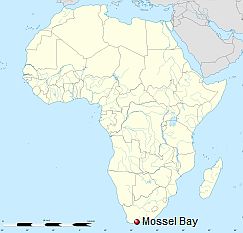
This blog will be the new home of the ZS1I Amateur Radio Projects / Activity-, ZS1I AllStarLink HUB / Gateway- and ZS1I DMR Digital Repeater Blog located in the most southern part of South Africa.  Now where is this town?  Mossel Bay is a harbour town of about 99,319 people on the Garden Route, South Africa. It is in an important tourism and farming region of the Western Cape.  Mossel Bay lies 400 kilometres east of the country's seat of parliament, Cape Town (which is also the capital city of the Western Cape), and 400 km west of Gqeberha. (formerly known as Port Elizabeth) 

Welcome to the new Amateur Radio blog! Whether you are a newly licensed ham or a seasoned veteran, this space is dedicated to exploring the vast, exciting world of radio communication. As of early 2026, the amateur radio community continues to thrive, with a mix of new technology—like digital modes,  Meshcore nodes—and digital repeaters, reflectors, gateways etc. 

Furthermore this blog is  designed to support new or prospective amateur radio operators, often serving as a virtual "Elmer" to help you navigate your journey into the art of radio. Discover topics from beginner guides, operating tips and much more.  Content will also be available for the seasoned radio amateur to encourage continued activity in Amateur Radio!

(Click on image for larger view.)

The ZS1I Amateur Radio Projects / Activities Blog will provide information and articles relating to the ZS1I AllStarLink HUB / Gateway-, MMDVM Digital Repeaters and Amateur Radio Projects /Activities.

From the 1 May 2026 this Blog will concentrate more on the following facets of amateur radio:

  • QRP Radio
  • Antenna Construction
  • WSPR
  • CW + WSPR Beacons
  • MMDVM Digital Radio (DMR, DSTAR, System Fusion)
  • Satellites
  • MMDVM Digital Repeaters
  • Reflectors and Servers
  • AREDN
  • Microprosessors / Tinkering
  • Homebrewing
  • Creating a new WhatsApp Group called "Activities in Amateur Radio" where I will also provide more information on new amateur radio activities.

Finally: 

Once again welcome to the new, updated world of amateur radio in 2026 via this Blog! As the amateur radio enters a phase of high activity and technological advancement, this is your hub for staying connected to the latest in amateur radio.

A heartfelt thank you to everyone who takes the time to read, view, and share these articles. Your engagement is what makes this blog a shared experience. If this blog resonated with you, I’d be honored if you shared it with someone who might enjoy it, too. I truly appreciate your time and attention.  It is my goal to provide valuable, actionable insights, and I hope this blog will succeed in you expectations.  Make sure to revisit the blog or even better subscribe so that you do not miss out on new content. 


Blog maintained by Johan ZS1I
Mossel Bay
29 April 2026


Is Social Media killing amateur radio on-the-air activity?

  In a recent discussion with a fellow radio amateur we discussed the use of WhatsApp, Telegram and even Facebook as a means of forwarding ...